Classify markets
Use a maturity ladder to understand whether the appropriate posture is avoid, monitor, engage, enable, partner or build.
Coming soon
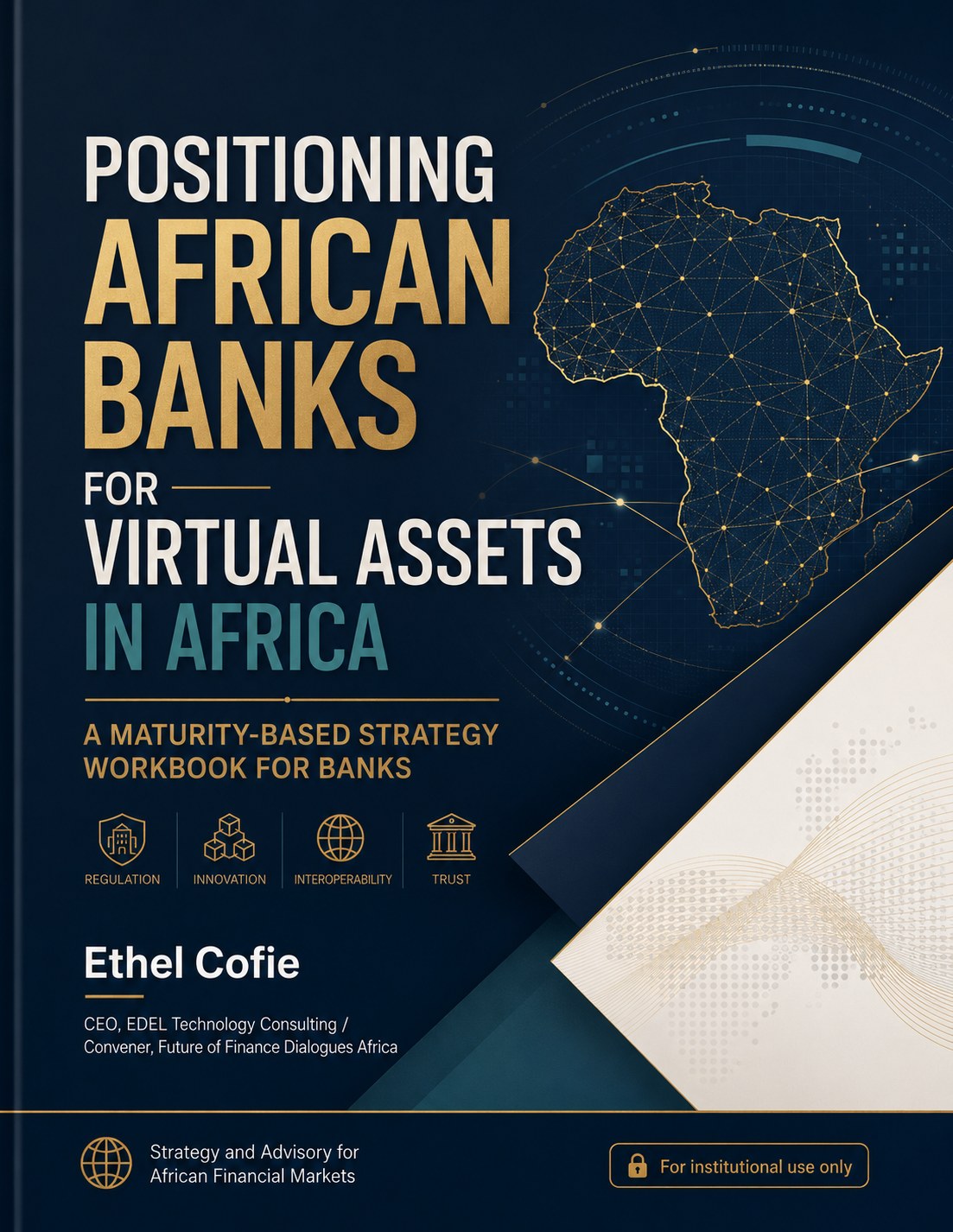
A maturity-based strategy workbook for banks.
A practical strategic tool for senior bankers, boards, risk teams, strategy leaders and compliance professionals navigating virtual assets across African markets.
What it does
This is not a crypto product manual. It is a structured decision tool for banks that need a defensible position on virtual assets by country, maturity level, risk appetite and capability.
Use a maturity ladder to understand whether the appropriate posture is avoid, monitor, engage, enable, partner or build.
Identify where virtual assets already touch customers, payment flows, remittances, FX exposure, compliance and correspondent banking relationships.
Convert analysis into policy documents, a country action map, a 90-day plan and an institutional positioning statement.
Who it is for
For institutions that cannot afford either reckless experimentation or lazy avoidance.
What the workbook answers
Where are virtual assets already touching the bank’s customers, transactions, risk perimeter and revenue model?
How mature is each country’s regulatory environment?
What should the bank avoid, monitor, engage, pilot, partner on or build?
What controls, capabilities and governance are required before action?
How can the bank act as a trusted regulated institution rather than a speculative market participant?